Identity statement
We carry the weight above every door.
Brand Architecture · Concept study
Property management · AvailableA property management agency built on one idea: carry the weight so the door stays open.
"Show an owner, in ten seconds, that nothing is falling through the cracks."
The session below is simulated and Lintel is a fictional brand, built to show our method. The method is real.
Step 1 · Listen
Every project starts here. We don't ask about colours or pages. We ask why the business exists, and listen for the sentence underneath the answer.
What does your agency do?
We let and manage flats and townhouses for owners. Most have between one and twenty units across Centurion, Midrand and Pretoria East.
Why do you really do this work?
My father had two flats. They were meant to give him rest. Instead he spent every weekend chasing tenants and plumbers.
What do owners ask you most?
"Where do things stand?" Which unit is empty, who is late, what's broken. They phone because they can't see.
When do things usually go wrong?
A lease ends and nobody noticed until the tenant has packed. A small leak becomes a ceiling. A deposit fight with no inspection on record.
And tenants?
They report a geyser, nobody answers, they report again, then they stop reporting and start looking for a new place.
What would you never do?
Lose a record. Let a unit sit empty because we were slow. Share a tenant's details with anyone who isn't the owner.
If your website could do one thing for an owner, what would it be?
Show them, in ten seconds, that nothing is falling through the cracks.
Simulated session · fictional client. A real session runs longer and covers more ground; these are the exchanges that shaped Lintel.
Step 2 · Extract
We write the identity down in seven short outputs. Every design decision after this has to trace back to one of them.
Identity statement
We carry the weight above every door.
Purpose
So that owners know where every unit stands, and tenants never chase twice.
The feeling, before and after
The moment of arrival
An owner opens the dashboard on a Monday morning. Every unit, every lease end, every open issue, in one view. Nothing to phone about.
Five principles
Words we use, words we avoid
The one moment the website must create
Nothing falls through the cracks.
An owner should feel certain before reading a word. So the dashboard sits near the top of the page, live, with real-looking units, lease ends and open issues.
Step 3 · Architect
Our framework, filled in for this brand. Read it from the foundation up: nothing above a layer can contradict the layer below it.
Measurement
Days to resolve, leases renewed before they end, vacancy days, owners who stay.
Execution
Shifting area photographs, a load diagram of what we carry, and a live owner dashboard.
Process
Handover. Inspection and set-up. Live dashboard. Monthly review.
Systems
One record per unit, lease alerts at 120, 60 and 30 days, a two-tap tenant report.
Structure
Five services, from letting to owner reporting.
Principles
Visible
Early
One record
A day
Care
Purpose
So that owners know where every unit stands, and tenants never chase twice.
Identity · the foundation
We carry the weight above every door.
Step 4 · Translate
Nothing on the site is decoration. Each choice answers something the client said. The tag shows which layer of the building it belongs to.
"They phone because they can't see."
A live owner dashboard on the home page
Units, occupancy, lease ends and open issues, filtered by area, before any sales copy.
"A lease ends and nobody noticed."
The lease-end timeline
Every lease on a 120-day line, coloured by urgency, with its renewal status.
"A small leak becomes a ceiling."
The maintenance board
Reported, booked, in progress, done, with days open on every card.
"They report again, then they stop reporting."
Report an issue in two taps
A tenant view that adds the issue straight to the board, answered within a day.
"My father spent every weekend chasing."
The lintel
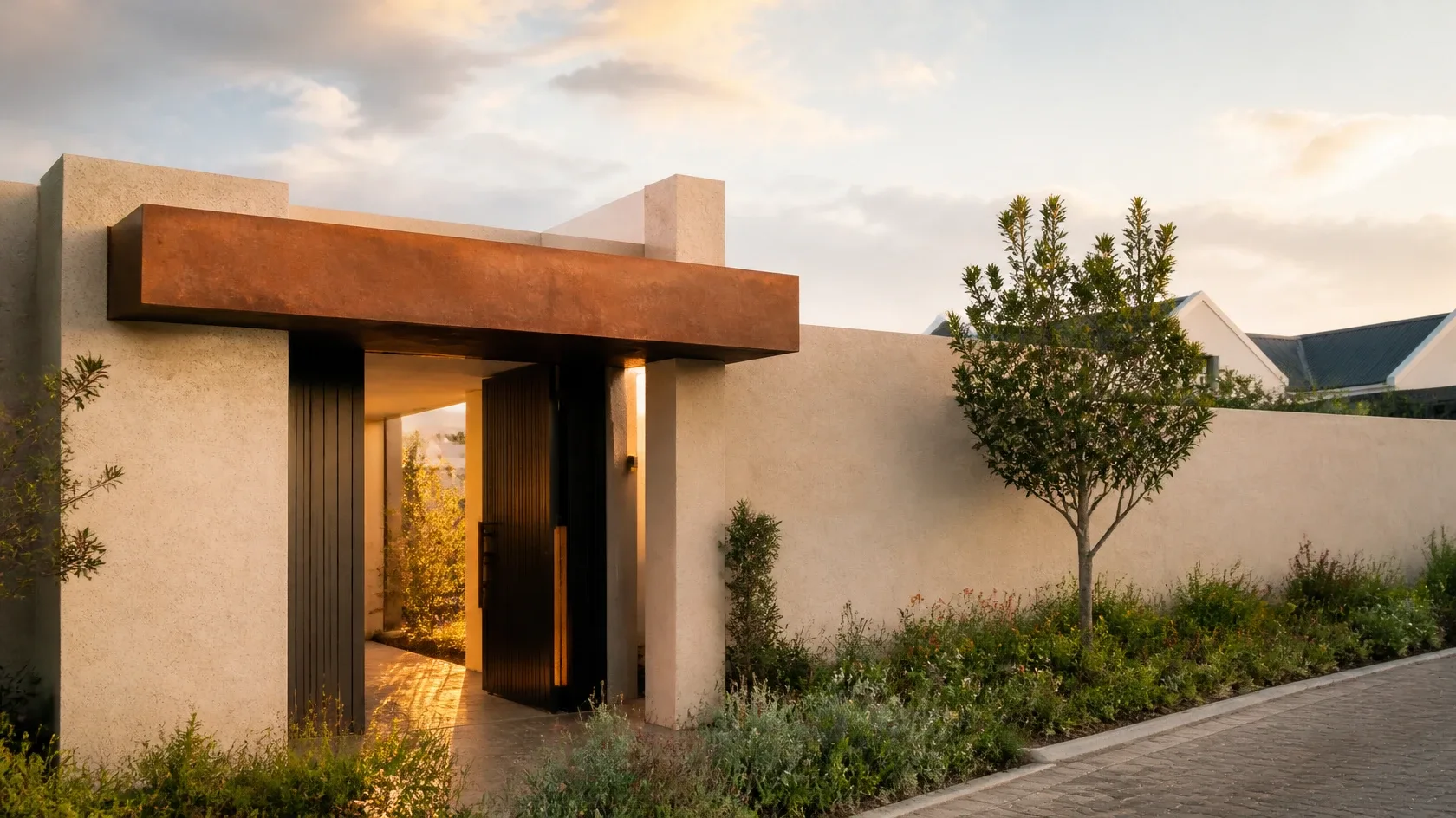
The beam above the door that carries the weight. Drawn in the hero, it carries the whole brand.
"Owners hire us to get their peace back."
What we carry, so you don't have to
Six burdens lift off owners or tenants onto the beam and become promises. What's left: the keys, or home.
"Never share a tenant's details."
Initials only
The dashboard shows tenants as initials; full details only for the owner of that unit.
"Lose a record. Never."
One record per unit
Every inspection, lease and issue in one place, so a deposit question has an answer.
"Show them in ten seconds."
Tiles an owner reads at a glance
Occupancy, leases ending, open issues and days to resolve, the numbers we are judged by.
Step 5 · Produce
Seven things the business keeps. The website is one of them, and it is only as strong as the six behind it.
1
Identity brief
Identity, purpose, principles and the feeling, on one page.
2
Brand line
"We carry the weight above every door."
3
Service architecture
Five services, from letting to owner reporting.
4
The website
Leads with a live owner dashboard, then services and booking.
5
The owner dashboard
Units, lease ends, issues and rent status, by area.
6
The tenant report
Two taps to report, answered within a day.
7
The measure
Days to resolve, renewals before the end date, vacancy days.
Step 6 · Make it yours
One business per city. We don't hand over a template: we run your identity session and rebuild the concept around your answers, so it's yours, not a copy.
R9,500 once-off
Founding price R8,500 for the first 3 businesses · then R450 a month for care · 50% to reserve your city, 50% at launch
1. Identity session
We run the same session you just read, with you. Your why, your nevers, your clients' words.
2. Adaptation
The concept is rewritten around your answers: your name, your story, your services and your photographs.
3. Build
We build it on your own web address, with your booking and contact details.
4. Launch and care
We launch it with you and look after it monthly, so it keeps matching who you are.
Brand Architecture
A concept licence is the fast route through our Brand Architecture work. If your identity isn't clear yet, these are the steps it compresses. Start with any of them.
Brand Gap Check
Ten questions about how your business shows up.
Free
The Brand Clinic
a working session where owners answer the five identity questions every brand is built on, with live diagnoses in the room.
R1,499 per seat
Brand Architecture Survey
a private, written diagnosis of where your brand and your business stopped matching, read from your answers and your actual materials.
R1,449 founding price (20 of 20 places left), then R2,450
Business Brand Blueprint
the full identity-first design of your business brand.
R10,000
Brand System Build
we build the brand your Blueprint designed.
from R18,000
Brand Stewardship
ongoing brand direction once the system is in place.
R10,000 a month
Send them this page with a ready-written note, and they can forward it themselves.